Overview
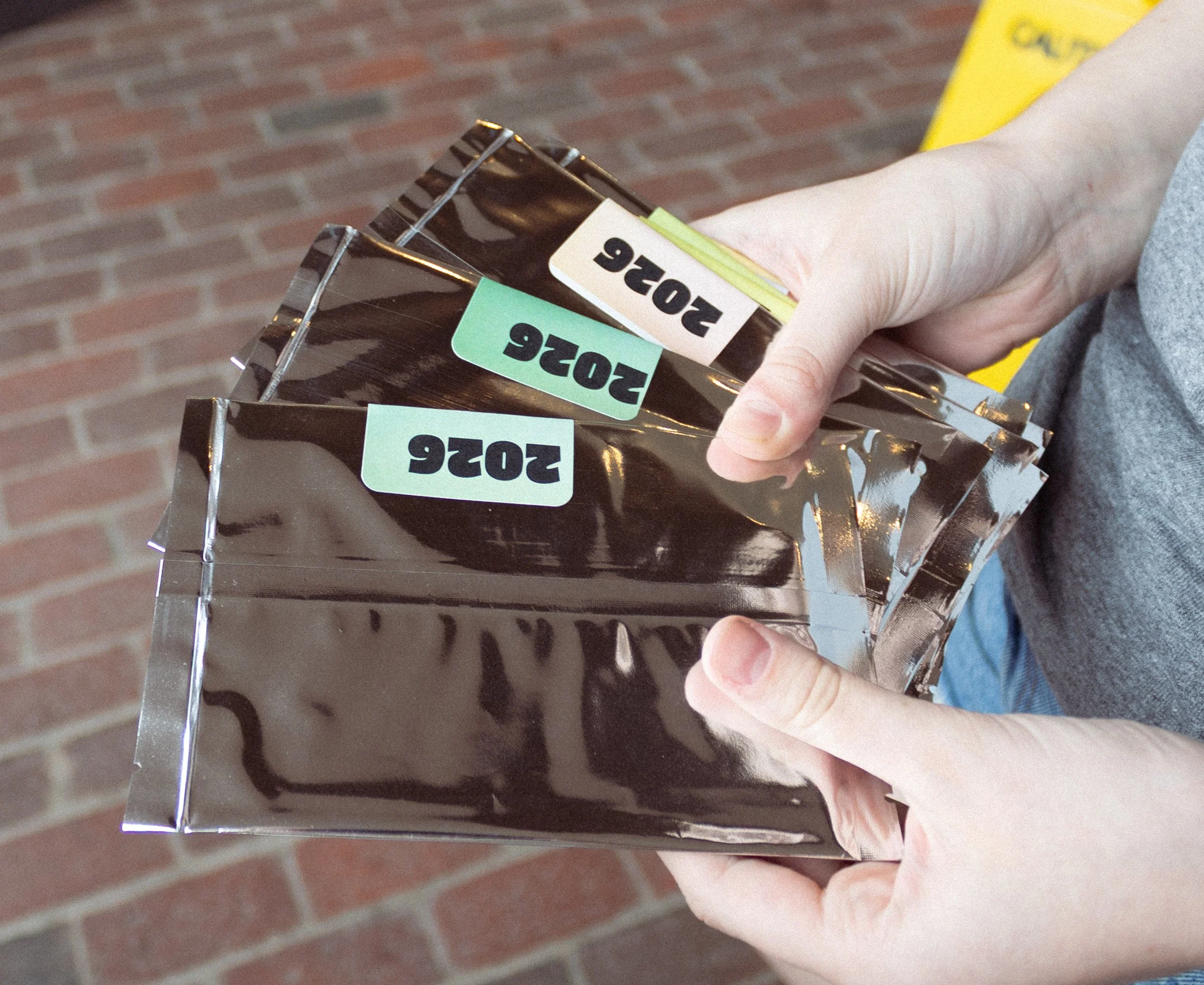
Campus Trade is a community-authored trading card game designed to help new students start conversations and begin the process of finding belonging in a new social environment. I produced this game as a co-design with MIT senior Kayode Dada, which we launched to 1,100 in-coming first-year students during MIT Orientation week in September 2026.Artifacts: Card game, website, co-design process, research findings
Partnership: realtalk@MIT, MIT Office of the First Year
Role: Production Lead, Designer, Researcher
Team: Kayode Dada (Creator, Designer, Community lead), Elijah Rice (Website Developer), Lizz Bolaji (Documentation)
Time: September 2025 - September 2026
Problem
Current students in higher-ed sit at the intersection of large social changes: the global pandemic, social-media driven isolation, and mass adoption of AI. It is no wonder why this demographic is particularly interested in having more authentic, open-ended conversations that push beyond tired or overly performative social scripts. A student once referred to these as "the big three" ("What's your major, hometown, and dorm"). Fostering conversations with more experience sharing (as opposed to opinion sharing) is a desirable culture change for institutions like MIT, who have picked up the mantle of addressing political polarization and institutional distrust. However, high-trust, authentic conversations are not something you can manufacture. Attempts by administrators to encourage culture change can miss the mark, often coming across as inauthentic, corporatized, or sterile.
Design Question
How can we support higher-ed students in their desire to initiate deeper conversations, and scaffold a genuine shift in communication culture?
Co-Design Format
Kayode Dada, a rising MIT senior, originally conceived of and implemented a version of Campus Trade for first-year students during Orientation Week 2025. At the end of the prototype, he noticed that the game produced a lot of immediate engagement, but not the longer-lasting social experience he envisioned. He approached me with the question of how to build a game that could both be fun, but also inspire meaningful dialogue amongst a new cohort of students. For the past year, I mentored Kayode in designing new game mechanics which could foster stronger conversational engagement, and lead to longer-lasting social change. We worked in close collaboration, drawing on my body of social games work and principles developed through an adjacent student co-design program. Empowering students to affect their own social culture was a principle I held strictly throughout the project, both in the design process and in what was produced. For me, this ambitious co-design was itself an experiment in collaboration, which pushed me to balance my own expertise with the intuitions of a community.
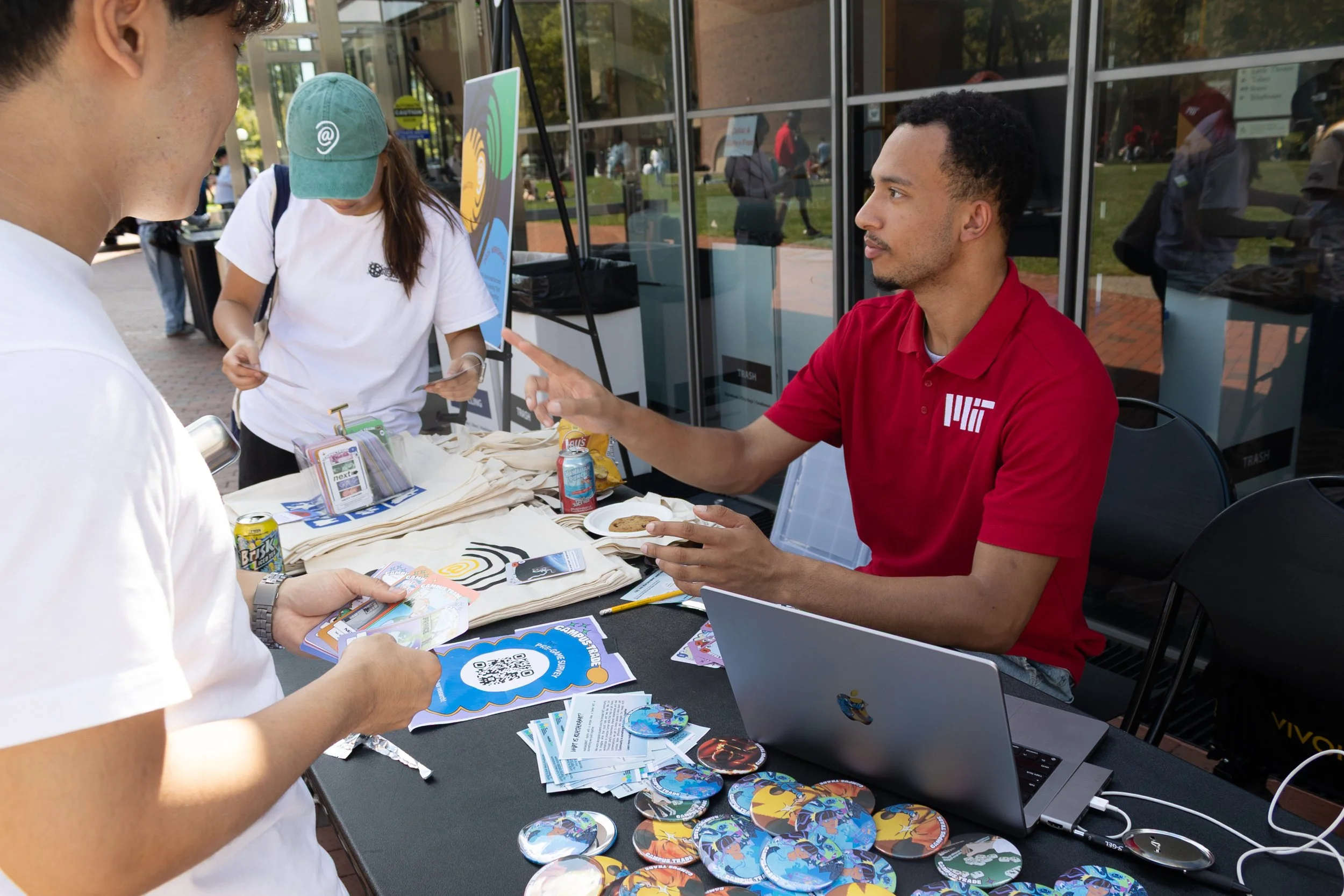
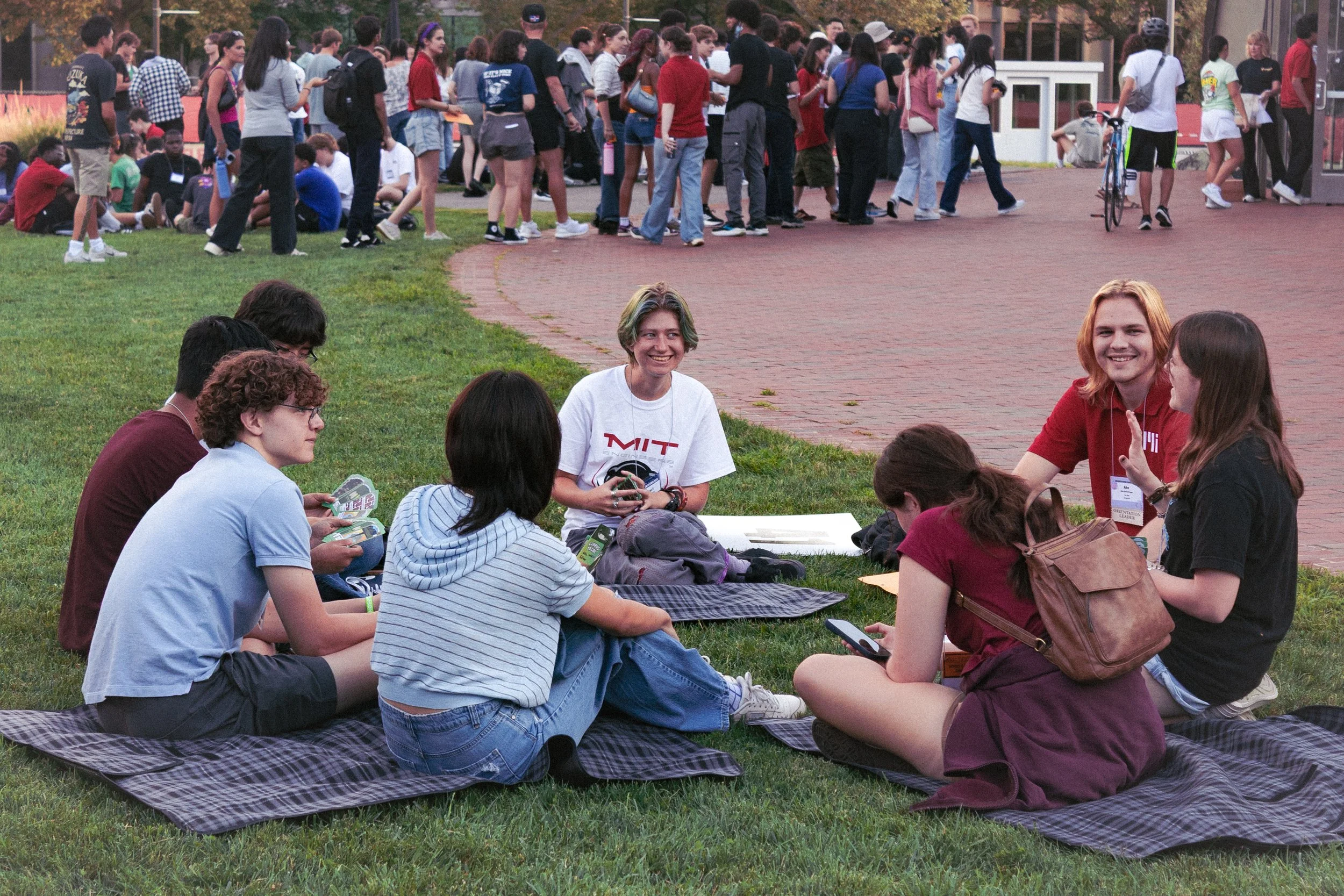
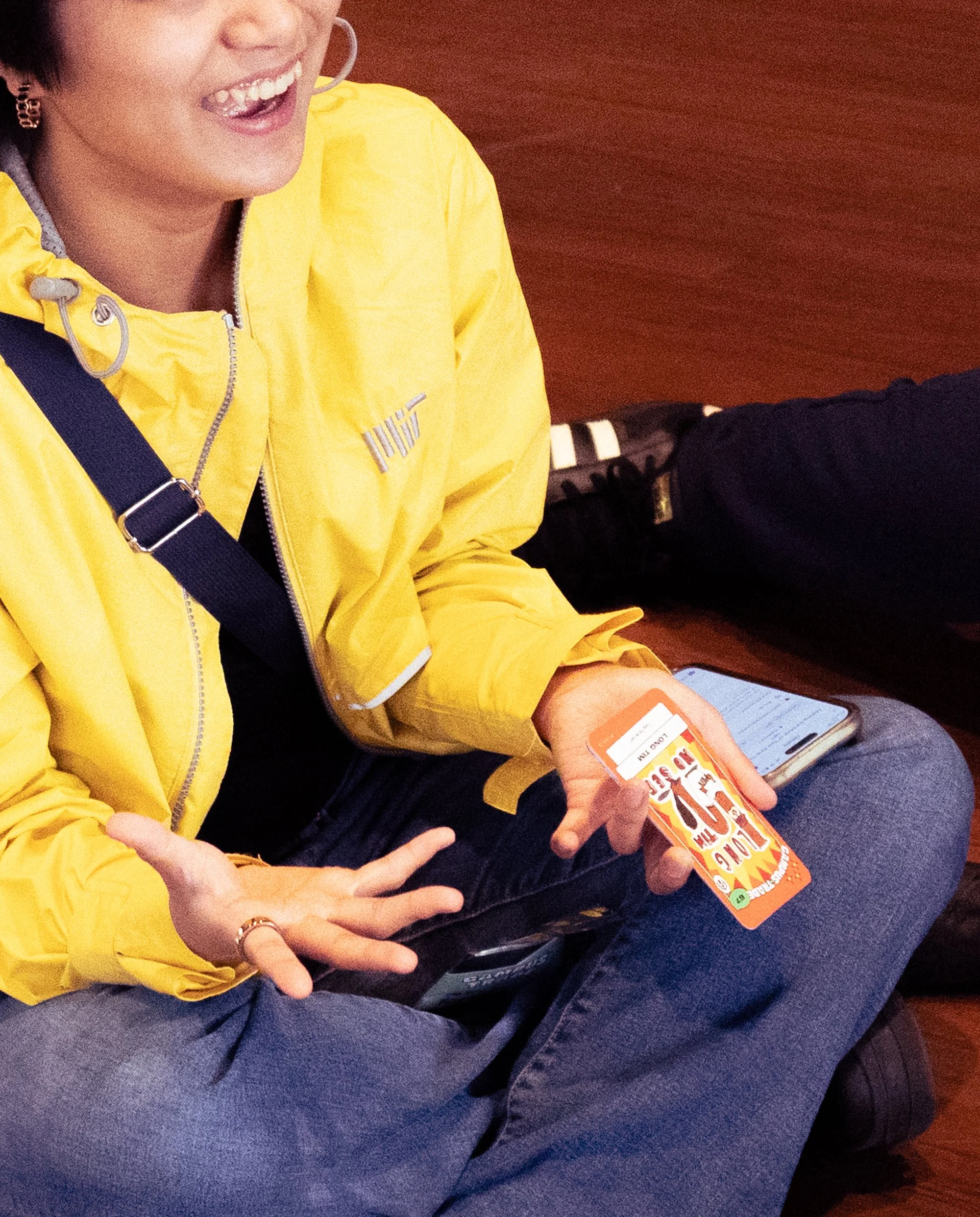
Kayode at the Campus Trade trading booth
Final Design
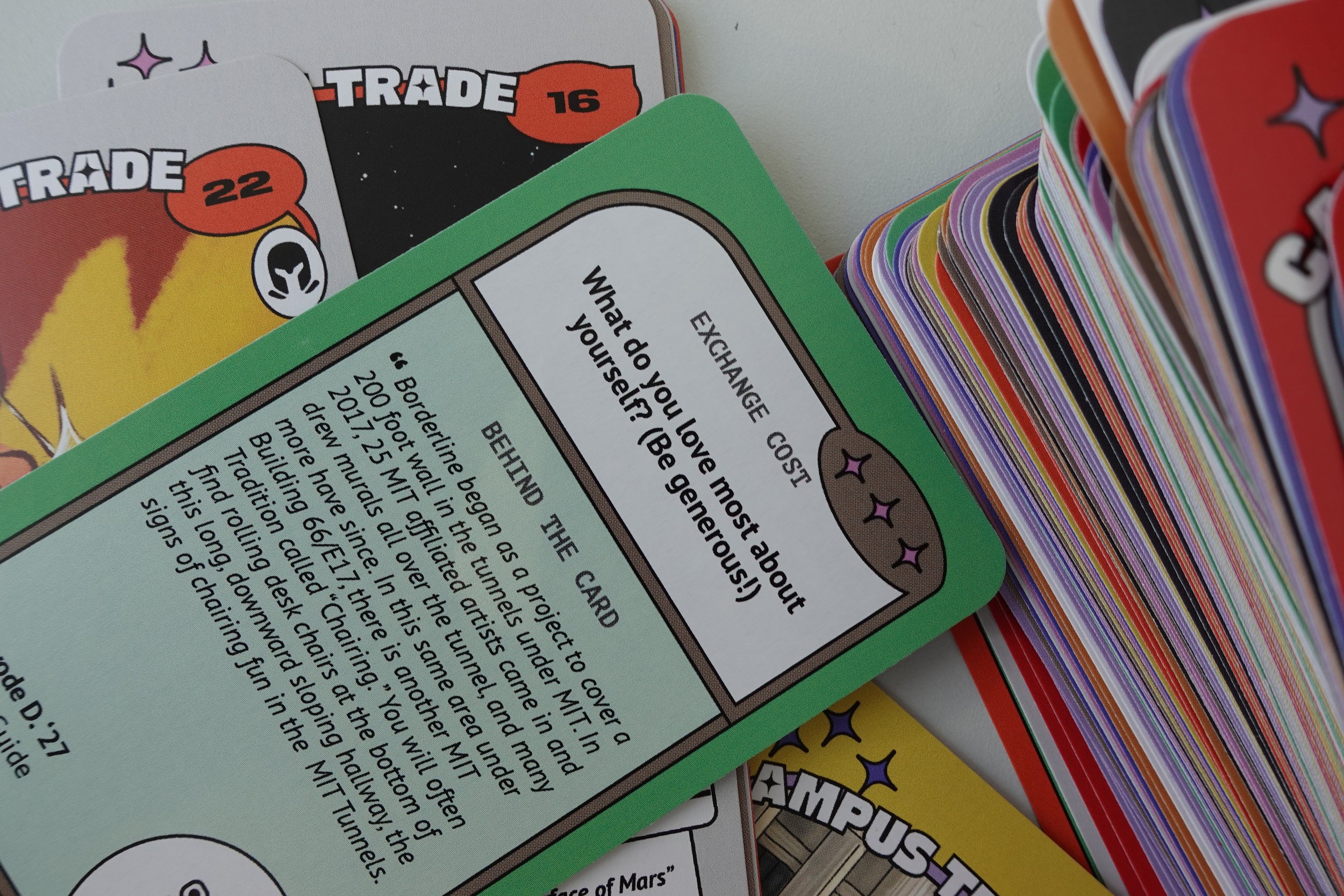
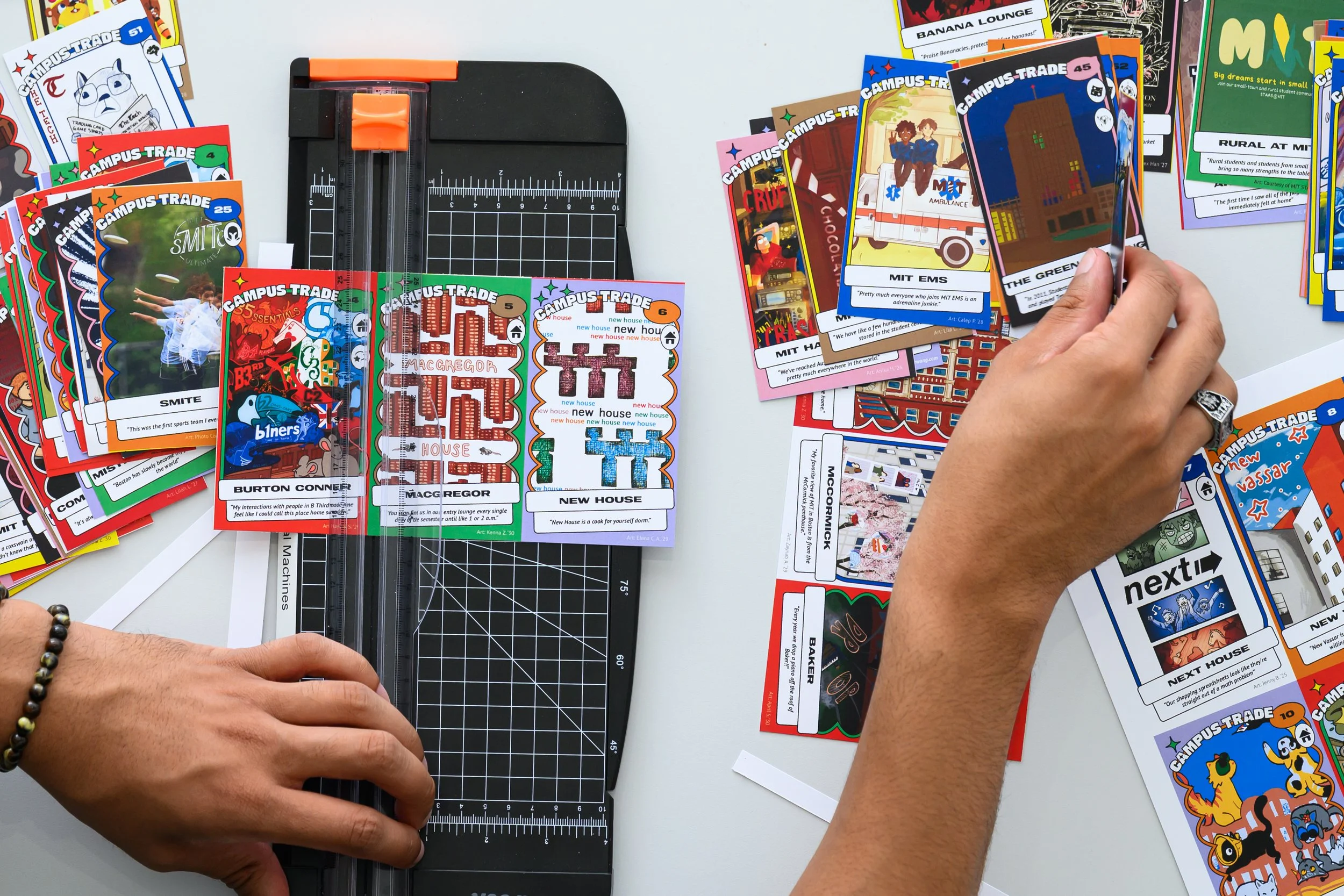
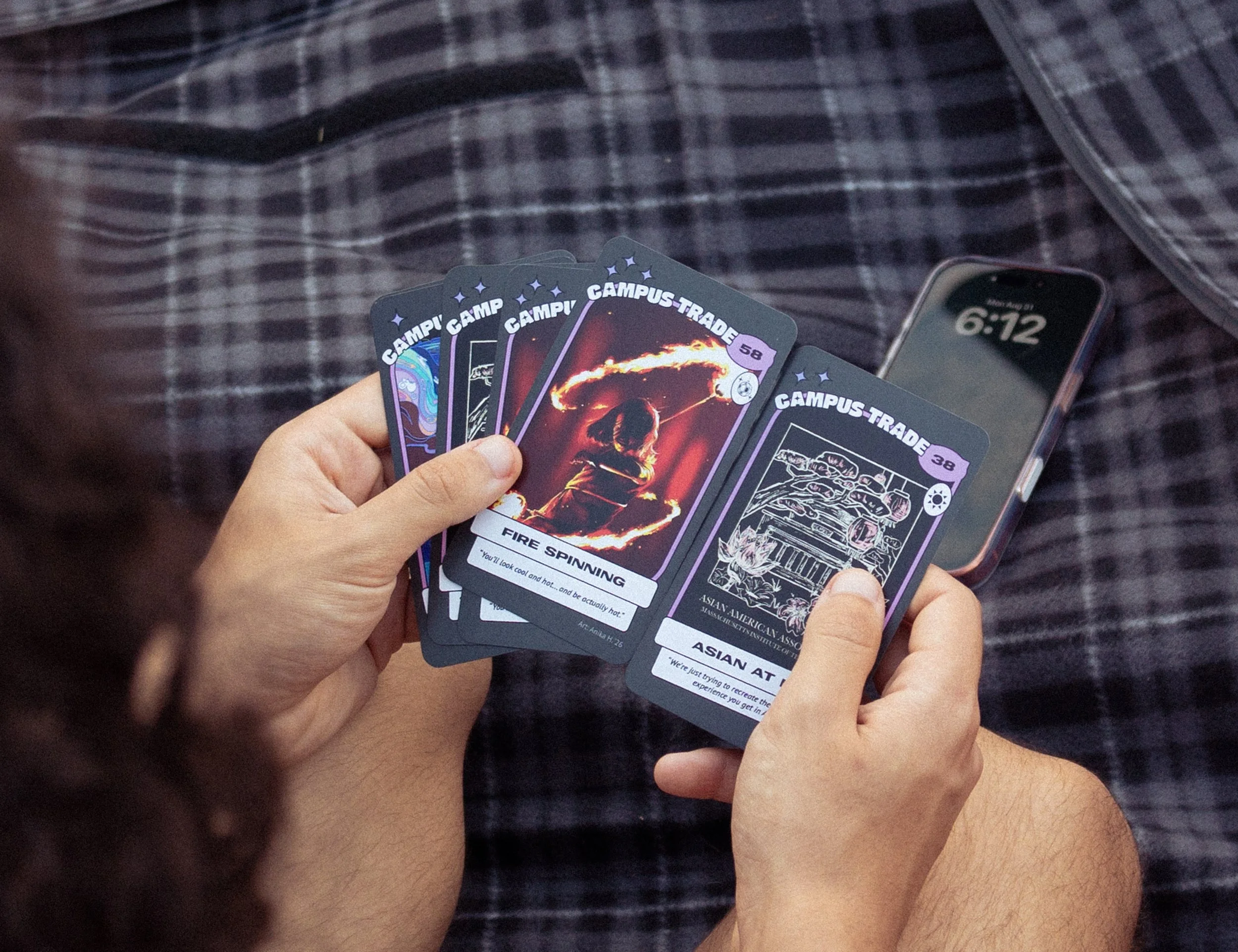
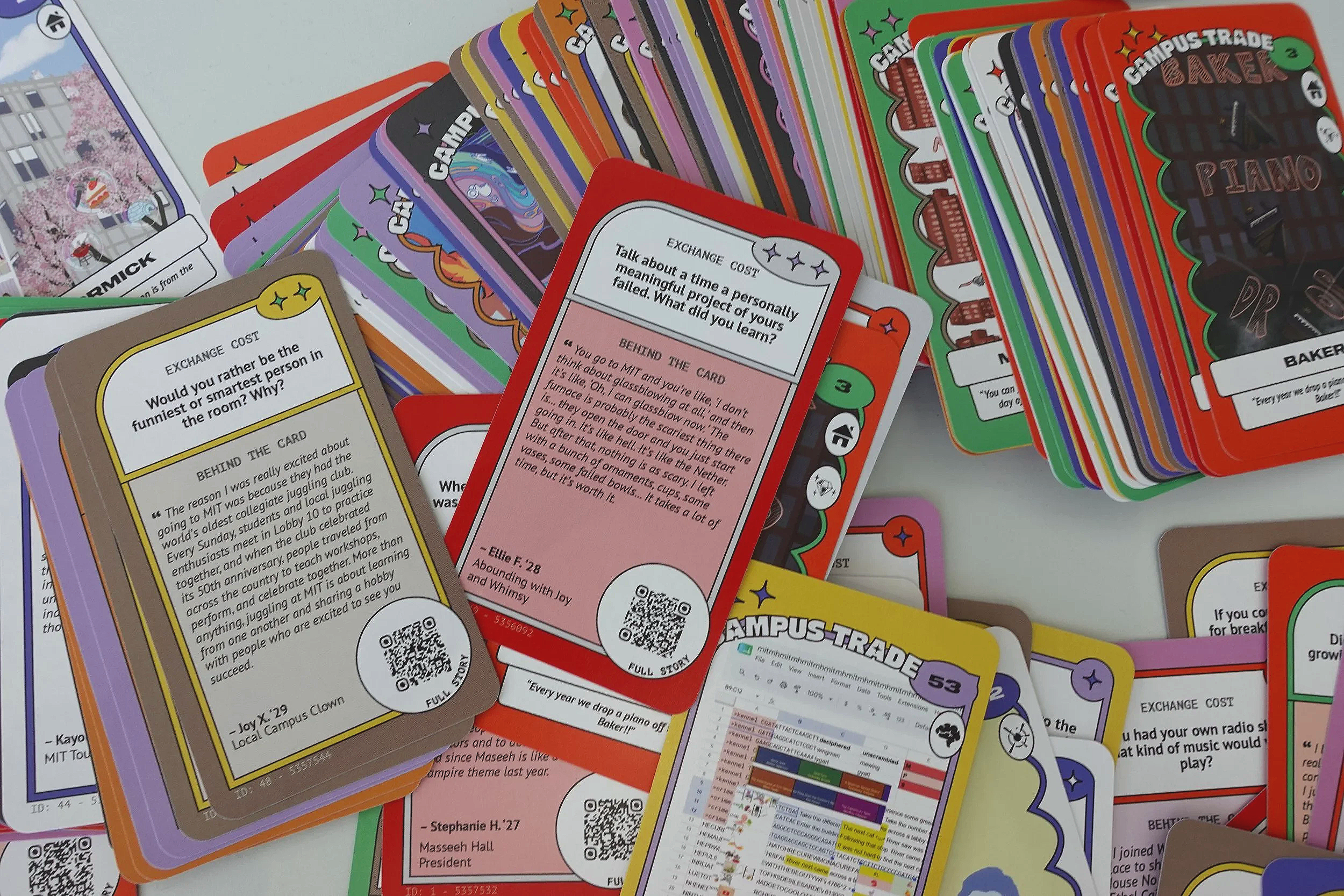
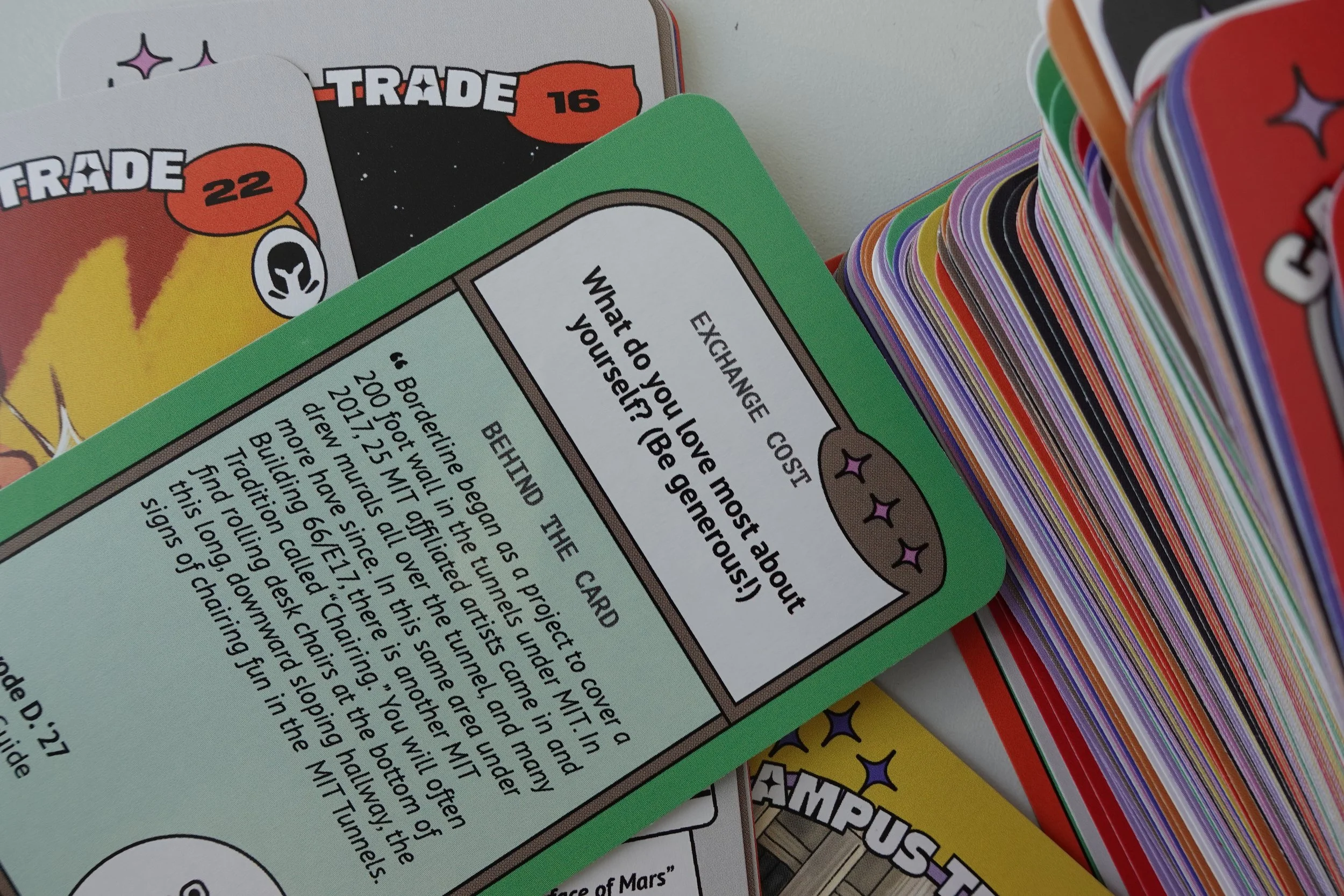
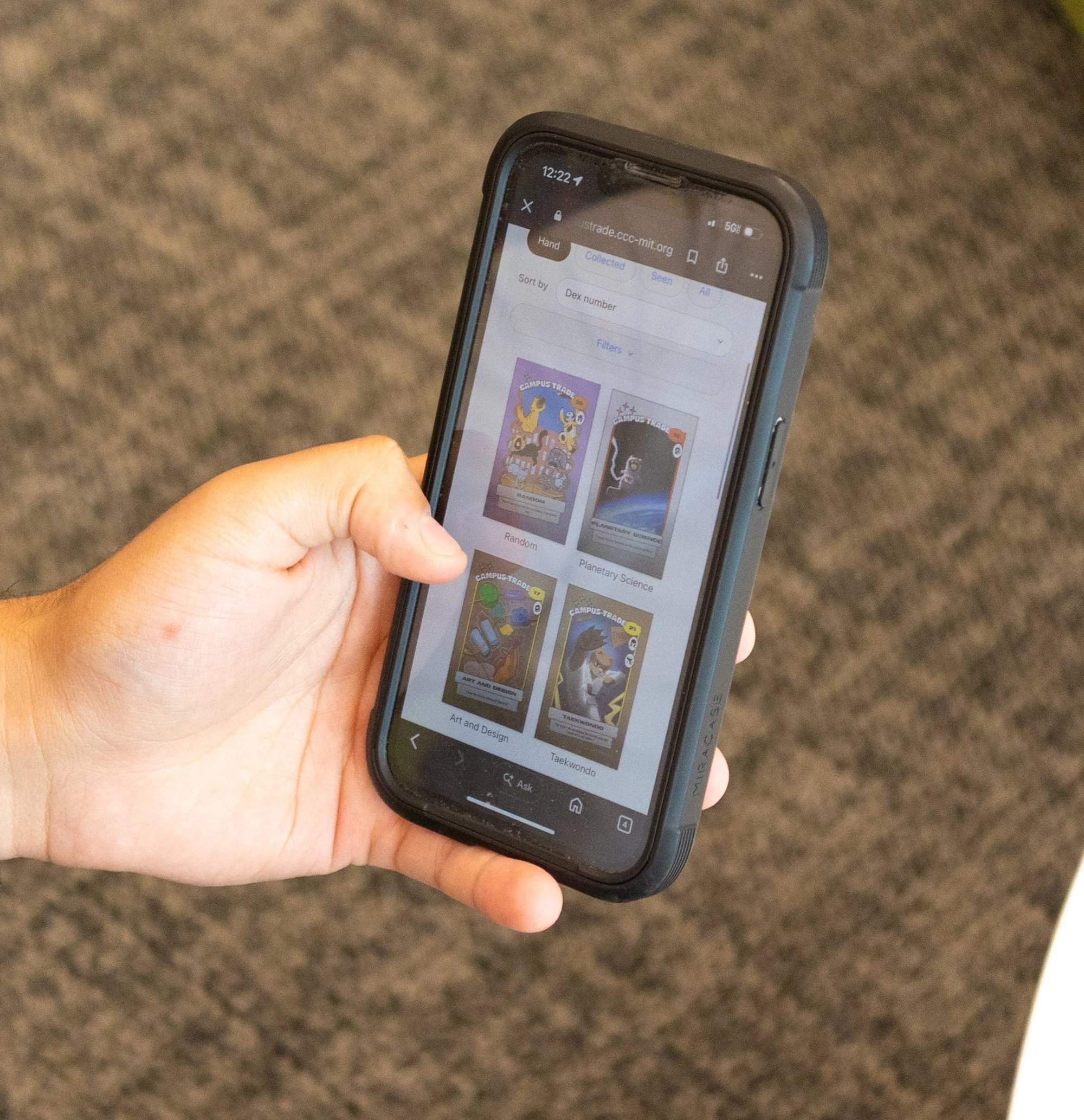
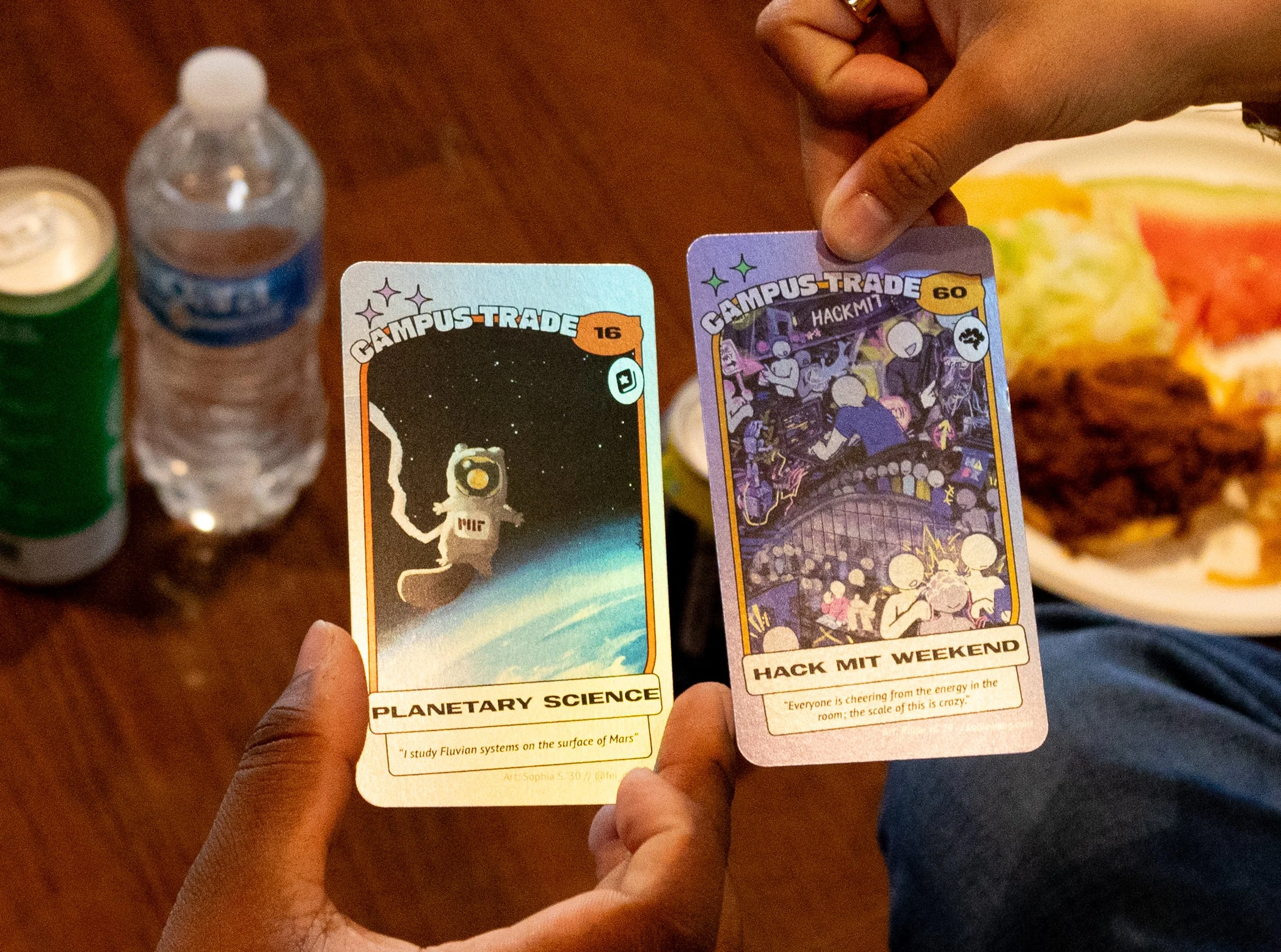
Each card in the tradable game system features an excerpt from a conversation between Kayode and another student, discussing how they found belonging on MIT campus. The artwork is also community-generated, giving every card within the full 72-card set an authentic texture of life on campus. By scanning the embedded QR code, you can listen to an excerpt of that conversation, read more about the club or student group that they reference, and see who else has exchanged the card. Thus the more you collect, the more of the collective story of MIT campus reveals itself to you.

To trade cards, you must complete the card’s “exchange cost” – a conversation or activity designed to foster personal storytelling. Players can choose to make sets based on the story type (e.g., sports cards, club cards), or color, and win prizes for creating specific types of sets.